Scoped to the loss
Water Damage Drying in Gettysburg
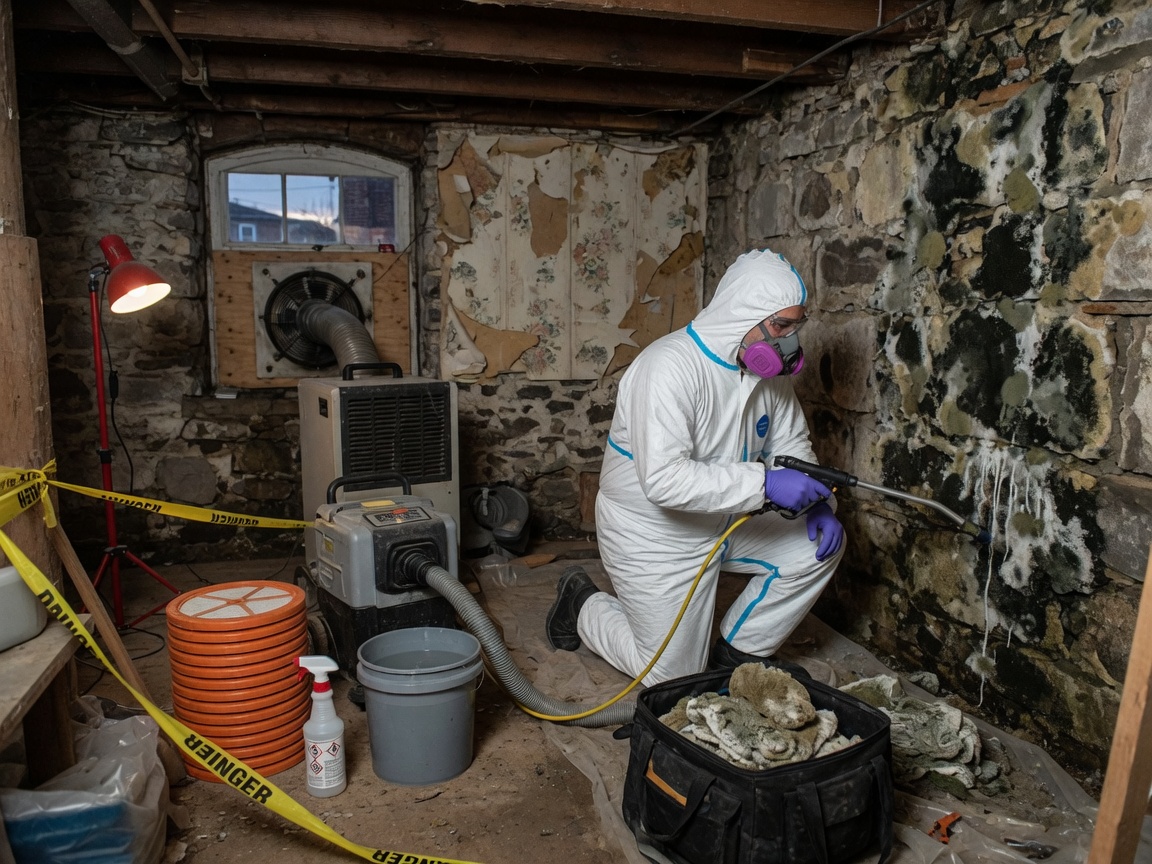
Mold is a water problem that got a calendar. In a typical Adams County house, mold can start colonizing wet drywall and carpet padding within about 48 hours, sometimes sooner in August. Drying is the remediation you do before there is remediation to do. If the materials are already colonized, we switch to a remediation scope instead of pretending a fan is enough.
What to do before we arrive
Stop the water if you can do it safely. Do not stand in a flooded basement with the power on. If sewage is involved, stay out and tell us — that is a different category of cleanup. Move photographs, documents, and anything porous you care about to a dry room. Do not pile wet boxes against a stone wall 'just for now.'
Skip the bleach bucket on the carpet. It does not dry the pad, and on a historic floor it can stain the wood. A household fan aimed at a puddle is fine until we get there. A shop vacuum is useful if the water is clean. Write down when the leak started. That timeline matters for both the drying plan and the insurance conversation.
We are open Saturday 9am to 2pm for urgent water, and Monday through Friday 8am to 6pm. If the leak is Sunday afternoon, stop the water, extract what you safely can, and we pick up at the next open hour.
Drying versus demolition
Clean water from a supply line, caught quickly, often means extraction, air movement, dehumidification, and daily or every-other-day meter readings. Drywall that is wet only at the surface may dry in place. Drywall that is saturated at the base usually gets the wet portion cut so the cavity can dry. We would rather cut a foot of drywall now than encapsulate a wet wall.
Category 3 water — sewage, river water, heavily contaminated floodwater — is not a fan-and-hope job. Porous materials that contacted it come out. Tell us if the sump discharged groundwater that mixed with a floor drain. We will scope it honestly.
What this visit can include
Extraction
Standing water removed so the equipment is drying the building, not a pond.
Structural drying
Air movers and dehumidifiers sized to the room, with moisture logs.
Selective cuts
Wet drywall or pad removed only where the meter says it will not dry.
Storm and sump events
Basements after Adams County rain, when the pit overflowed or the power blinked.
Documentation
Photos and readings you can attach to a claim file.
How the day goes
- 1Make it safePower, sewage, and structure first. Then water.
- 2Extract and openGet bulk water out and expose cavities that cannot dry closed.
- 3Dry to a readingEquipment stays until framing and slab readings say so.
- 4Hand you the logTimes, photos, and numbers for your records or your adjuster.
Typical ranges
| Work | Range | What moves it |
|---|---|---|
| Localized clean-water dry-out | Quoted from the room count | How much standing water and how many days of equipment. |
| Equipment days | Listed in the quote | We do not leave machines running after the meters are in range. |
| If mold is already active | Switches to remediation pricing | Usually when water sat for several days. |
| Sewage or floodwater | Separate scope | Porous materials are removed, not dried and kept. |
Ranges are typical for Gettysburg and confirmed with a written quote before any work starts.