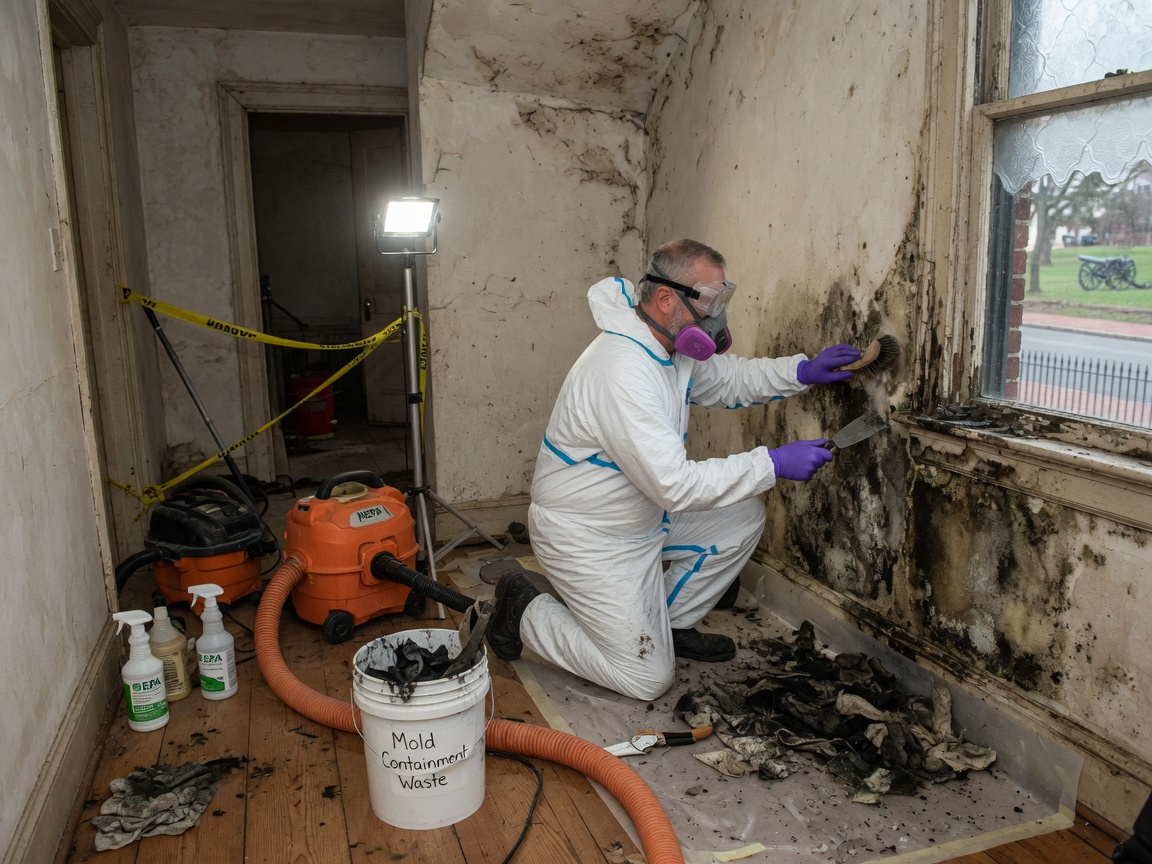
Older homes around the Gettysburg College area and in Historic Gettysburg often feature stone foundations and limited ventilation that trap moisture during cold winters, allowing black mold to establish behind plaster and in crawl spaces. Technicians must use negative air machines and sealed containments to prevent spores from spreading into adjacent rooms while removing affected drywall and insulation without disturbing original woodwork.
In neighborhoods like Barlow Knoll, summer humidity combined with runoff from nearby Gettysburg National Military Park terrain can keep soil against foundations damp for weeks. This requires locating hidden leaks at roof valleys or around window wells before any removal begins, followed by HEPA vacuuming and antimicrobial treatment of exposed framing.
Properties near Eisenhower National Historic Site frequently show mold growth in attics where ice dams from winter storms force water under shingles. Removal crews document every step with photos and moisture readings so homeowners can verify that all contaminated material has been extracted and the structure dried to safe levels before reconstruction.
Technician insight
In Gettysburg, the thing that catches most people out with Black Mold Removal is hidden growth along the stone foundations of homes built before 1900 in the Gettysburg College area, where cold winters push condensation into uninsulated crawl spaces that never fully dry during humid summers.
Barlow Knoll Basement Growth
Homeowner noticed musty odor after heavy spring rain. Inspection found black mold along the rear foundation wall where grading sloped toward the house. Crew isolated the area, removed wet drywall and insulation, treated framing, and directed grading corrections to keep soil drier.
Black Mold Removal Services We Offer
✓Black Mold Inspection in Historic Gettysburg Homes
Detailed visual and moisture meter inspection of 19th-century structures to locate hidden colonies without damaging original finishes.
✓Containment Setup for Adams County Properties
Installation of negative-pressure barriers and air scrubbers to isolate work zones in homes near Gettysburg Battlefield.
✓Affected Material Removal and Disposal
Safe cutting and bagging of drywall, insulation, and trim followed by transport to approved facilities serving Hanover and Carlisle routes.
✓Moisture Source Correction near Barlow Knoll
Identification and repair guidance for foundation seepage or poor grading that keeps soil wet against older stone walls.
✓Post-Removal Drying and Verification
Use of dehumidifiers and air movers with follow-up readings to confirm dryness before any rebuilding in Gettysburg College area homes.
Black Mold Removal Cost in Gettysburg, PA
| Service | Typical Range | What Affects It |
|---|---|---|
| Small localized removal under 10 sq ft | $650–$1,200 | Higher in tight attic or basement spaces common in Historic Gettysburg |
| Moderate wall or ceiling section | $1,400–$2,800 | Includes containment and disposal; increases with stone foundation access |
| Whole-room remediation | $3,000–$5,500 | Typical when winter condensation has spread behind multiple walls |
| Post-remediation verification visit | $250–$400 | Optional third-party style readings for peace of mind |
Ranges are typical for Gettysburg, PA and confirmed with an exact written quote before any work starts.
How it works
- 1
Site Assessment
Technician inspects affected rooms, measures moisture in walls and floors, and maps the extent of growth while noting access challenges typical of historic Gettysburg construction.
- 2
Containment and Protection
Plastic barriers and negative air machines are installed to seal the work area from the rest of the house and prevent spore migration into living spaces.
- 3
Removal and Cleaning
Contaminated materials are cut out, bagged, and removed; remaining surfaces receive HEPA vacuuming and antimicrobial application.
- 4
Drying and Final Check
Equipment dries the structure, then moisture meters and visual checks confirm the area meets safe standards before barriers come down.
Pricing
Cost depends on square footage affected, accessibility in older homes, and whether hidden growth requires additional demolition.