$250–$450
Mold Testing in Gettysburg
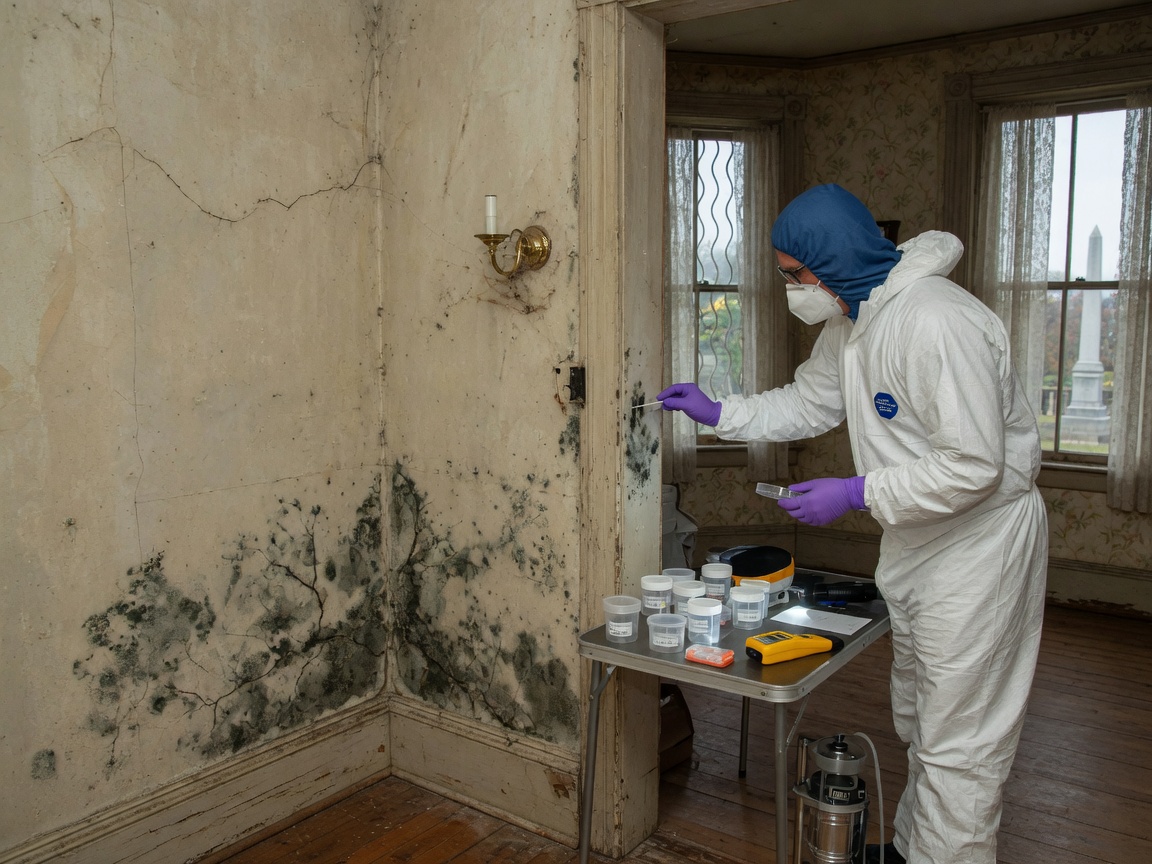
Testing answers a narrower question than most people think: what is in the air or on a surface, compared with outside, on the day we sample. It does not, by itself, find the leak. We pair sampling with a moisture map so the report tells you whether to clean, open a wall, or fix drainage first.
When testing is worth paying for
Pay for testing when you cannot see the growth but people feel worse at home, when you are buying a house in the borough or a surrounding township, when a tenant and landlord disagree, or when an insurer wants documentation after a sudden leak. Skip it when you can already see a patch on drywall and you know the pipe that caused it — spend that money on stopping the water and removing the material.
We use moisture meters, visual inspection, and, when the question calls for it, non-viable air samples or tape lifts. Lab turnaround is typically a few business days. We explain the report in plain language: genera that showed up, how they compare with outdoors, and what we would do next. A long list of Latin names is not a diagnosis of your health.
Standalone assessments are quoted separately, usually $250–$450 depending on how many samples the question needs. If we go on to do the remediation, the initial inspection and moisture mapping are included in that job.
What a useful report looks like
A useful report names the rooms, the outdoor control, the lab method, and the moisture readings. It should say whether conditions support growth right now — wet drywall, 70 percent humidity in a closed attic — or whether you are looking at old, dry staining. Old staining can stay visually ugly after the colony is dead. Dead fragments still bother some people, which is why cleaning still matters, but they do not need the same urgency as an active wet wall.
We will not tell you that a spore count means you have to move out tonight. If the house is heavily contaminated, we will say so and talk about containment and whether sensitive occupants should be elsewhere during demolition. That is a judgment about dust, not a medical order.
What this visit can include
Indoor and outdoor air samples
Comparison sampling so an indoor count has a baseline from the same day in Adams County air.
Surface lifts
Tape or swab lifts when you need to know what is on a joist, a vent, or a windowsill.
Moisture mapping
Pin and non-invasive meters on plaster, sills, and subfloors — the part that actually finds the water.
Pre-purchase walkthroughs
Focused inspections for buyers of pre-war houses around Lincoln Square, the College, and the townships.
Clearance sampling
Post-remediation samples when a buyer, lender, or insurer wants a lab comparison.
How the day goes
- 1Define the questionOdor, a real-estate contingency, a tenant complaint, or clearance. The question decides the samples.
- 2Inspect and meterWe look and measure before we spend your money on cassettes.
- 3Sample with a controlIndoor samples plus an outdoor comparison, labeled by room.
- 4Explain the lab sheetYou get the report and a straight recommendation: monitor, clean, or open the wall.
Typical ranges
| Work | Range | What moves it |
|---|---|---|
| Inspection plus limited sampling | $250–$450 | Number of samples and whether the attic or crawl is accessible. |
| Each additional air sample | Quoted with the lab fee | The lab, not a mystery surcharge. |
| Clearance after remediation | $150–$350 | How many contained areas need a comparison. |
| Included moisture map | Included with remediation | Waived as a separate line when we do the removal. |
Ranges are typical for Gettysburg and confirmed with a written quote before any work starts.