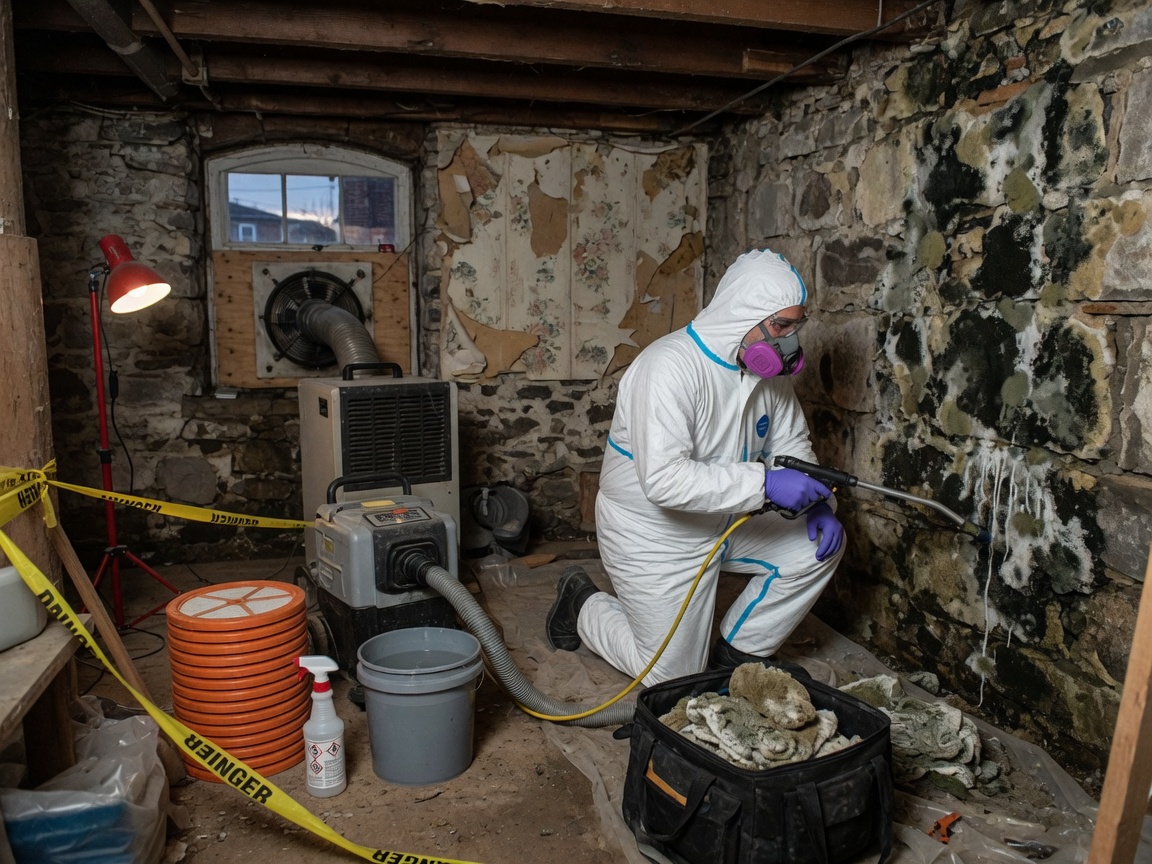
Older homes in Historic Gettysburg and the Gettysburg College area often feature stone foundations and limited airflow that trap moisture during cold winters, allowing mold to grow behind plaster and in crawl spaces. Warm humid summers accelerate spore spread through attics and basements, especially near the Battlefield where groundwater levels stay higher. Remediation crews must work carefully around preserved structures to avoid disturbing original materials while still achieving full containment.
In Adams County, spring snowmelt and summer storms frequently push water into Barlow Knoll basements and low-lying properties near Hanover Road. These events create hidden growth in insulation and subfloors that standard visual checks miss. Proper protocol requires negative air machines, HEPA filtration, and removal of affected porous materials before any rebuilding begins.
Properties near Carlisle and the Eisenhower National Historic Site face additional challenges from shifting seasonal humidity that condenses on cooler interior walls. Technicians document moisture readings at multiple depths and use targeted drying equipment sized for the home’s age and construction. This prevents recurrence without unnecessary demolition in historic fabric.
Technician insight
In Gettysburg the thing that catches most people out with mold remediation is winter condensation collecting behind plaster in 1800s homes around the College area and Barlow Knoll. The stone foundations and tight rooflines hold moisture from snowmelt longer than newer builds near Hanover, so crews often find growth that started months earlier.
Hidden Growth After Winter Melt
A Barlow Knoll homeowner noticed musty odors in the basement following spring snowmelt. Inspection revealed mold behind insulation on the north wall where cold air met warm indoor air. Crews contained the space, removed affected materials, dried the joists, and added a vapor barrier. The home passed clearance testing and the odor did not return.
Mold Remediation Services We Offer
✓Basement Mold Remediation
Removes mold from stone and concrete basements common in Historic Gettysburg homes, including drying of affected joists and installation of vapor barriers.
✓Attic Mold Removal
Treats mold growth in poorly ventilated attics of older Gettysburg College area houses caused by roof leaks and winter condensation.
✓Crawl Space Mold Treatment
Addresses mold in dirt-floor crawl spaces typical of Barlow Knoll properties, with encapsulation to control ongoing moisture from Adams County soil.
✓Post-Storm Mold Remediation
Handles mold after heavy rains or snowmelt that affects homes near Gettysburg National Military Park and low-lying sections of the Battlefield area.
✓Historic Home Mold Remediation
Performs careful removal in pre-1900 structures around the Eisenhower National Historic Site while preserving original plaster and woodwork.
Mold Remediation Cost in Gettysburg, PA
| Service | Typical Range | What Affects It |
|---|---|---|
| Small localized removal (under 10 sq ft) | $400–$800 | Higher in homes with limited access like stone basements in Historic Gettysburg |
| Medium area remediation (10–50 sq ft) | $900–$2,200 | Includes attic or crawl space work common in Barlow Knoll properties |
| Large or multi-room project | $2,500–$5,000+ | Varies with historic materials and hidden moisture near Gettysburg Battlefield |
| Post-remediation air testing | $150–$350 | Required for clearance in Adams County homes |
Ranges are typical for Gettysburg, PA and confirmed with an exact written quote before any work starts.
How it works
- 1
Initial Assessment
Technicians inspect affected areas in the home, measure moisture levels, and identify the water source using tools suited to older Adams County construction.
- 2
Containment Setup
Plastic barriers and negative air pressure isolate the work zone to prevent spores from spreading to unaffected rooms in Gettysburg homes.
- 3
Removal and Cleaning
Damaged materials are removed, surfaces are treated with EPA-registered solutions, and HEPA vacuums capture remaining spores.
- 4
Drying and Verification
Dehumidifiers and air movers dry the space, followed by post-remediation testing to confirm mold levels meet clearance standards.
Pricing
Costs depend on the size of the affected area, home age, and extent of hidden damage; quotes provided after inspection.