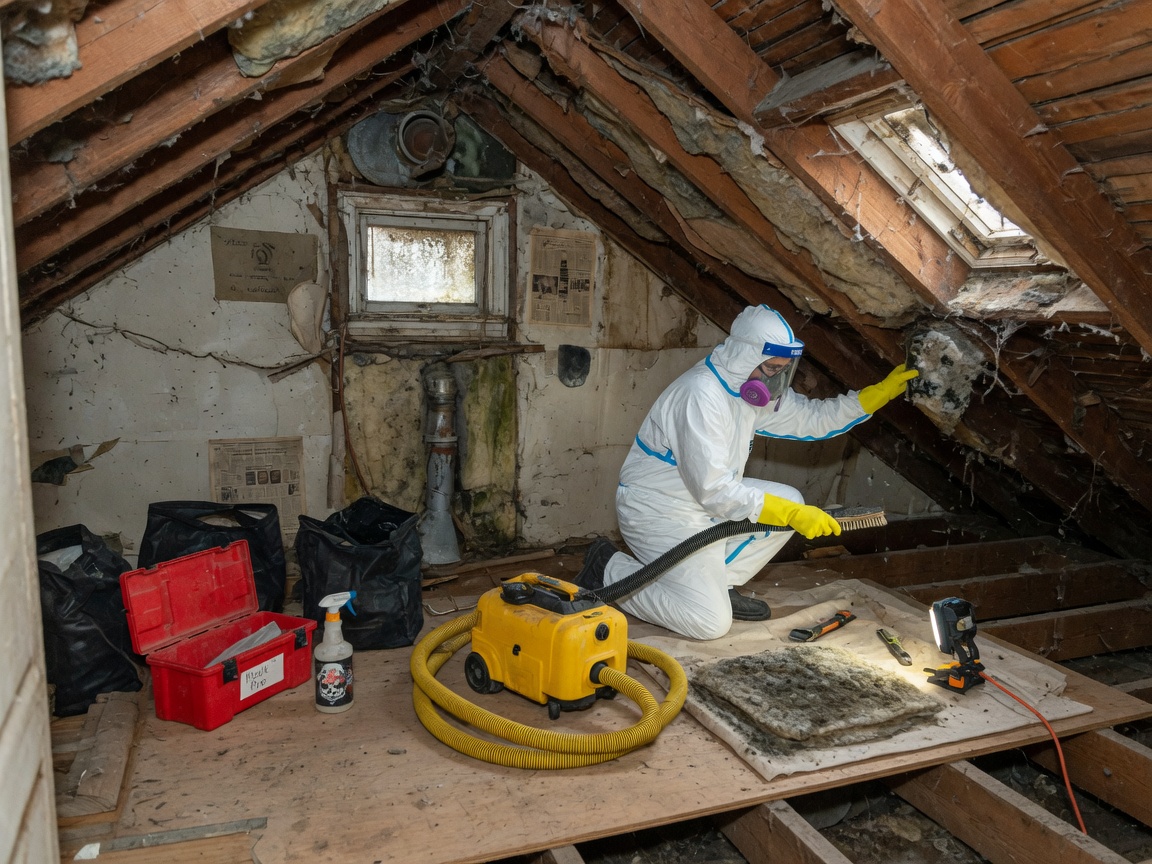
Gettysburg attics in Historic Gettysburg and around Gettysburg College often sit above 19th-century timber framing with limited soffit or ridge venting. Warm summer humidity followed by sharp winter freezes drives condensation on roof sheathing, especially where ice dams form along north-facing slopes near the battlefield. Standard fiberglass batts trap the moisture, letting black mold colonies spread across rafters and into collar ties before homeowners notice musty odors downstairs.
Remediation here requires removing contaminated insulation without disturbing knob-and-tube wiring common in Barlow Knoll and older Adams County properties. Negative-air machines vent through gable ends to avoid pulling spores into living spaces below, and antimicrobial coatings must be compatible with historic plaster ceilings. After source removal, crews add baffles and powered ventilators sized for the steep roof pitches typical around Gettysburg National Military Park to prevent recurrence once temperatures drop again.
Homeowners in nearby Hanover and Carlisle frequently discover attic mold only after ceiling stains appear following heavy spring rains. We inspect for hidden roof leaks at flashing around chimneys and dormers, then document moisture readings on sheathing before any containment is built. This step-by-step verification keeps the job contained to the attic and avoids unnecessary drywall removal in finished second floors.
Technician insight
In Gettysburg, the thing that catches most people out with Attic Mold Remediation is the combination of 1800s timber roofs and our cold winters—ice dams push meltwater under shingles, it soaks the insulation, then freezes again, locking moisture against the sheathing for months. Homeowners in Historic Gettysburg often miss it until the ceiling stains show up because the attics have almost no ventilation.
Barlow Knoll Attic After Winter Ice Dams
A homeowner near Barlow Knoll noticed a musty smell in the upstairs hallway after a late March thaw. We found black growth along the north rafters where repeated ice dams had forced water under the shingles. After removing saturated insulation and treating the sheathing, we added ridge venting sized for the steep pitch; the attic stayed dry through the next freeze cycle.
Attic Mold Remediation Services We Offer
✓Historic Home Attic Inspection
Detailed moisture mapping and borescope checks of rafters in pre-1900 Gettysburg homes to locate hidden growth without disturbing original plaster.
✓Contaminated Insulation Removal
Safe extraction of moldy fiberglass or cellulose from attics above Gettysburg College area properties, bagged and disposed to prevent spore spread.
✓Attic Ventilation Upgrade
Installation of ridge vents and baffles sized for steep roofs common near Gettysburg Battlefield to reduce winter condensation.
✓Ice Dam Moisture Treatment
Targeted drying and antimicrobial application along roof edges where cold winters cause repeated ice dams in Historic Gettysburg.
✓Rafter Surface Remediation
HEPA sanding and sealing of exposed timber in attics over older Adams County homes after mold colonies are physically removed.
Attic Mold Remediation Cost in Gettysburg, PA
| Service | Typical Range | What Affects It |
|---|---|---|
| Small attic inspection and minor removal | $650–$950 | Single-story Gettysburg homes with limited growth |
| Standard attic remediation | $1,200–$2,100 | Two-story homes in Historic Gettysburg with insulation removal |
| Large or multi-level attic job | $2,400–$3,800 | Older properties near Gettysburg National Military Park requiring ventilation upgrades |
| Ice dam related treatment add-on | $350–$650 | Extra drying and edge sealing after winter damage |
Ranges are typical for Gettysburg, PA and confirmed with an exact written quote before any work starts.
How it works
- 1
Initial Attic Assessment
We enter through existing access points in Gettysburg homes, measure moisture on sheathing and rafters, and identify any active roof leaks or blocked vents.
- 2
Containment Setup
Plastic barriers and negative air are established to isolate the attic from living areas below, protecting finished spaces in historic structures.
- 3
Source Removal
Moldy insulation and affected wood surfaces are removed, bagged, and carried out without tracking spores through the home.
- 4
Drying and Treatment
Air movers and dehumidifiers bring attic humidity below 50 percent, followed by surface application to remaining rafters.
- 5
Ventilation Correction
New baffles and exhaust are added to match the roof pitch and climate demands of Adams County winters.
Pricing
Pricing depends on attic size, amount of insulation to remove, and whether roof leaks must be addressed before treatment.