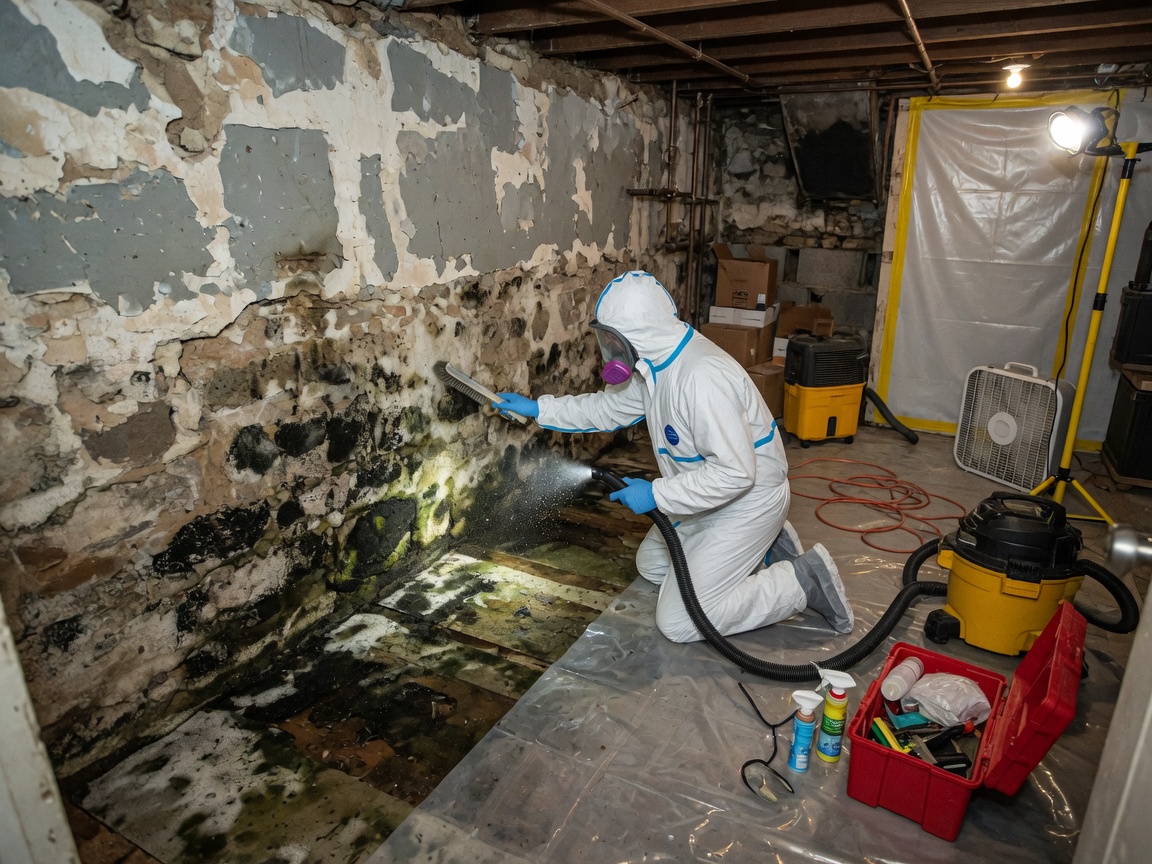
Gettysburg's older housing stock in Historic Gettysburg and around Gettysburg College often features stone foundations that wick moisture during the cold winters typical of this humid continental climate. These walls, common in properties near the Gettysburg Battlefield, develop hidden mold behind insulation or in crawl spaces when spring thaw raises groundwater levels in Adams County. Technicians must account for limited access points in these structures and test for hidden growth along footings before any containment setup.
Near Barlow Knoll and Eisenhower National Historic Site, basements frequently sit on sloped terrain that channels runoff toward foundations during heavy summer rains. This creates persistent dampness around sump pits and along floor joists that standard dehumidification alone cannot resolve. Remediation crews isolate affected zones, remove porous materials like old carpet padding, and apply antimicrobial treatments suited to the local clay-heavy soils that retain water longer than surrounding areas.
Homeowners in areas bordering Hanover or Carlisle sometimes overlook how seasonal freeze-thaw cycles crack mortar joints, allowing spores to travel upward into living spaces. Proper remediation includes sealing these entry points with vapor barriers rated for Pennsylvania conditions and confirming airflow patterns unique to each Gettysburg basement layout before final clearance testing.
Edge cases arise when mold reaches shared walls in duplexes common near the college or when previous owners applied incompatible sealants that trap moisture. Crews document all findings with photos and adjust containment to protect nearby historic features without altering the property's character.
Technician insight
In Gettysburg, the thing that catches most people out with Basement Mold Remediation is how quickly cold winter air forces condensation behind insulation on stone foundations near the battlefield. Homeowners in Historic Gettysburg and Barlow Knoll often miss the moisture that builds along footings until spring, letting growth travel up into floor joists before anyone notices.
Hidden Mold After Winter in Barlow Knoll Basement
A homeowner noticed musty odors in a Barlow Knoll basement following a cold snap. Inspection revealed mold along the stone foundation where frost had pushed moisture through mortar joints. Crews contained the area, removed affected insulation, treated the walls, and installed a vapor barrier. Clearance testing confirmed safe levels before the space was returned to use.
Basement Mold Remediation Services We Offer
✓Foundation Wall Mold Treatment
Removes mold from stone and concrete walls common in Gettysburg basements while addressing seepage points from winter frost heave.
✓Sump Pump Area Remediation
Cleans and treats mold growth around sump pits where groundwater collects after Adams County spring rains.
✓Crawl Space Mold Removal
Targets hidden mold under older homes near Gettysburg National Military Park where poor ventilation meets humid summers.
✓Joist and Subfloor Treatment
Eliminates mold on wooden supports damaged by condensation during Gettysburg's cold winter months.
✓Post-Flood Basement Drying
Restores basements after water intrusion from heavy rains common near the Gettysburg Battlefield terrain.
Basement Mold Remediation Cost in Gettysburg, PA
| Service | Typical Range | What Affects It |
|---|---|---|
| Initial Basement Inspection | $150–$350 | Higher for multi-level homes or limited access in Historic Gettysburg stone foundations. |
| Small Area Remediation | $800–$1,800 | Covers localized growth under 100 sq ft near sump pits or walls. |
| Full Basement Treatment | $2,200–$5,500 | Includes joists and subfloors in older Adams County homes after winter moisture issues. |
| Crawl Space Add-On | $600–$1,400 | Additional cost when mold extends under homes near Barlow Knoll. |
Ranges are typical for Gettysburg, PA and confirmed with an exact written quote before any work starts.
How it works
- 1
Inspection And Moisture Mapping
Technicians examine the full basement footprint, checking stone walls and low spots typical in Historic Gettysburg properties.
- 2
Containment Setup
Negative air machines and plastic barriers isolate the work zone to prevent spore spread to upper levels.
- 3
Removal And Cleaning
Affected materials are removed and surfaces are treated with EPA-registered antimicrobials suited to local conditions.
- 4
Drying And Final Testing
Dehumidifiers run until moisture levels stabilize, followed by air sampling before clearance.
Pricing
Upfront quotes after inspection; final cost depends on square footage and hidden growth extent.