Seasonal · January 14, 2026
Ventilation Tips for Preventing Winter Condensation Mold
Winter mold in Gettysburg is usually condensation wearing a different coat. The house is closed, showers and cooking add moisture, and cold plaster and glass are below the dew point. You see it as wet windows, then as black specks on a sill or a closet on an outside wall.
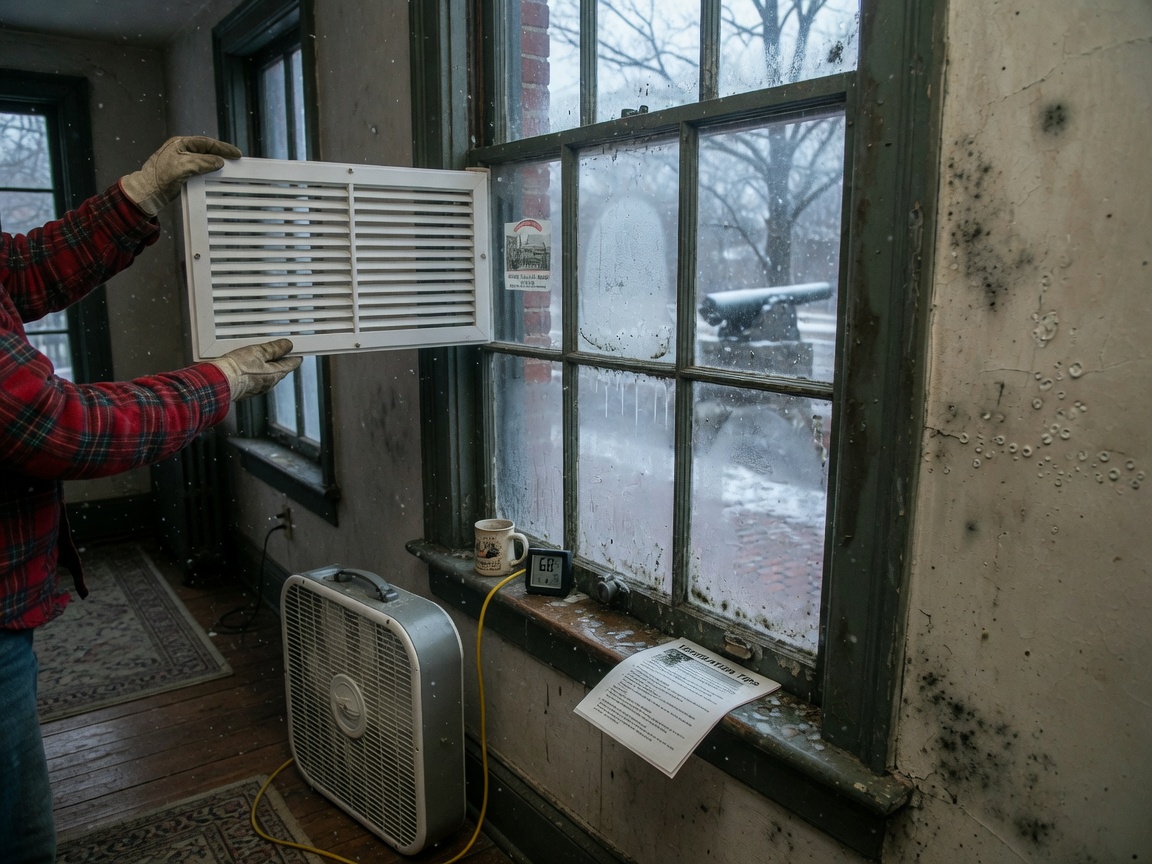
Fans that leave the building
Run the bath fan during the shower and for twenty minutes after, and confirm the duct ends outside. Many older fans are loud and go nowhere. A kitchen fan that recirculates does not count as ventilation. If you only change one thing this winter, make the bathroom exhaust real.
Do not use the furnace fan setting 'on' as ventilation. In a damp house it just shares the damp.
Humidity you can live with
In a pre-war house, indoor humidity in the 30s in January is normal and often healthier for the woodwork than 50 percent. If a portable humidifier is running next to a window that pours, turn it down. Wipe sills, but treat wiping as a signal, not a solution.
Furniture tight against an outside plaster wall keeps that wall cold and still. An inch of air gap is not a design trend. It is how the wall stays above the dew point.
Closets and corners
A closet on a north wall with the door shut and a box against the plaster is the first place specks show up. Leave the door ajar on very cold weeks or accept that the closet is a cold room and do not store leather and paper there.
If the sill wood is soft, the condensation has been winning for more than one winter. That is a small repair plus a humidity change, not a whole-house treatment.
- Bath fans must exhaust outdoors.
- Lower winter humidity suits old plaster.
- Give outside walls and closets a little air.