2026-09-16 ·
Signs of Mold in Historic Gettysburg Homes After Spring Rains
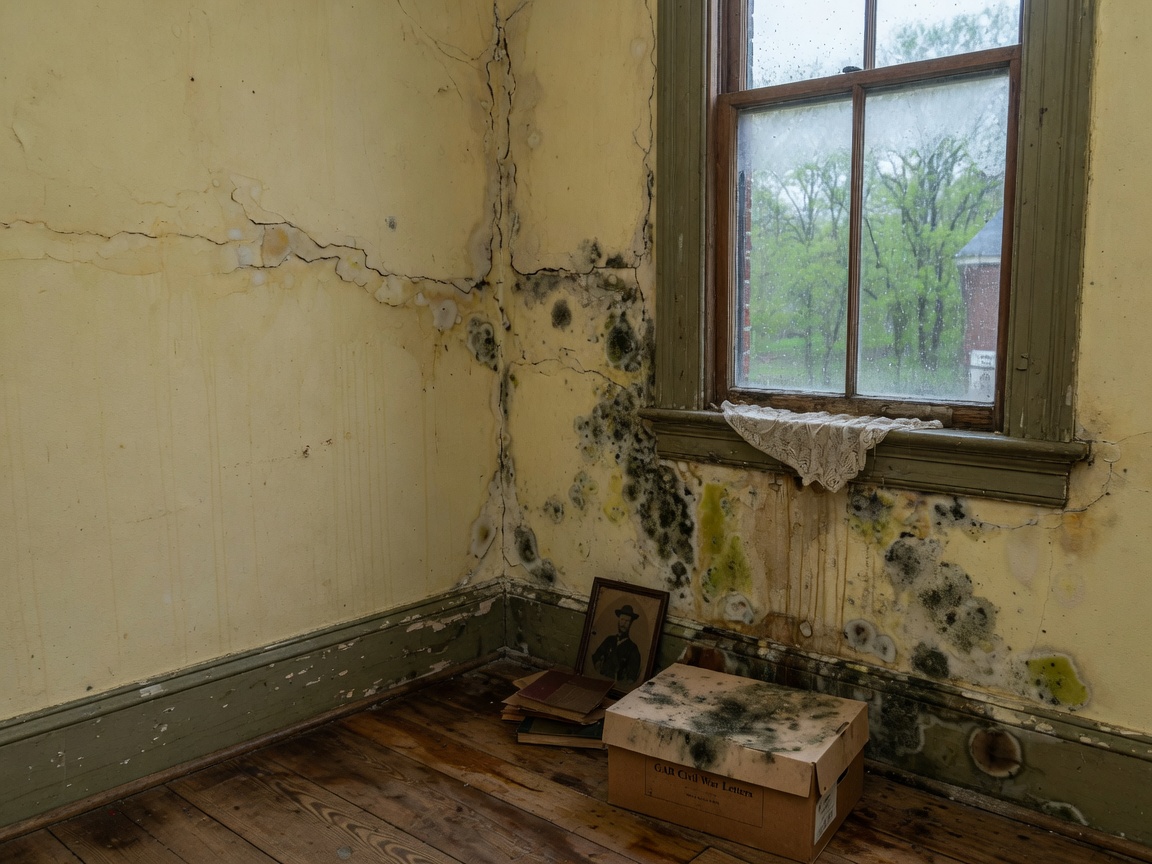
After spring rains in Historic Gettysburg, the most common signs of mold include persistent musty odors rising from basements or crawl spaces within 48 hours, brownish or blackish stains along plaster walls near foundations, and sudden spikes in allergy symptoms among household members. These indicators stem directly from the area’s older stone and brick construction combined with Adams County’s humid continental climate, where warm spring downpours saturate aging mortar and soil around properties near Gettysburg National Military Park.
Moisture Pathways in Older Gettysburg Homes
Spring rains in Adams County often exceed two inches in a single event, allowing water to enter through hairline cracks in limestone foundations common to homes built before 1900 in the Gettysburg College area. Water travels along wooden floor joists and settles in dirt crawl spaces, where poor original drainage lets moisture linger for weeks. Residents near Barlow Knoll frequently notice dampness on interior stone walls that were never designed with modern vapor barriers. Checking window wells and grading around the Eisenhower National Historic Site vicinity reveals how even slight slopes direct runoff toward basements. These conditions differ from newer construction in nearby Hanover because the historic stock lacks sealed exteriors and proper French drains.
Visible and Sensory Indicators After Rainfall
Musty smells concentrated in lower levels signal active growth on organic materials like horsehair plaster and wooden lath, especially when humidity stays above 60 percent following a storm. Look for fuzzy growth or peeling wallpaper on north-facing walls that receive less sun and dry slower in Gettysburg’s cool spring evenings. Dark streaks along baseboards in Barlow Knoll homes often trace back to water wicking from saturated soil rather than roof leaks. Allergy flares such as sneezing or itchy eyes that improve when away from the house point to airborne spores released after rain events. These signs appear faster in properties bordering Gettysburg Battlefield because the surrounding terrain holds moisture longer than open fields near Carlisle.
Hidden Growth in Basements and Attics
Many Historic Gettysburg homes have unfinished basements where mold colonizes behind stored items or on cardboard boxes left on concrete floors after spring flooding. Attic mold develops when roof leaks from clogged gutters allow water to reach insulation, a frequent issue in homes near Rock Creek. Testing air quality reveals elevated spore counts even when growth stays out of sight behind paneling. Properties in the Gettysburg College area with original slate roofs face extra risk because ice dams from prior winters create entry points that spring rains then exploit. Regular inspection of HVAC registers for black flecks helps catch circulation before it spreads through the entire structure.
Practical Next Steps for Homeowners
Document any discoloration with photos taken immediately after rains and note the exact locations relative to downspouts or grading changes. Improving ventilation in crawl spaces by adding sealed vents reduces the damp conditions that follow Adams County’s spring pattern. When odors persist beyond a week, professional assessment through mold testing identifies species and extent without disturbing surfaces. For confirmed growth, targeted mold remediation addresses both visible and hidden colonies while protecting historic materials. Homeowners dealing with repeated basement issues can review local soil and drainage issues that lead to crawl space mold for targeted prevention strategies suited to Gettysburg’s terrain.