Remediation · May 1, 2026
DIY Mold Cleanup vs. Hiring a Crew
Not every spot needs a crew. A small patch on a hard surface, with the leak already fixed and the material dry, is ordinary cleaning. The jobs that go wrong are the ones that look small on the paint and are large in the wall, or the ones people scrub with bleach and a tee shirt.
A reasonable DIY box
The spot is smaller than about ten square feet. It is on tile, glass, metal, or sealed wood, not on drywall paper or insulation. The water is stopped and the material is dry. Nobody in the house has a serious respiratory condition. You can keep the room closed off from the rest of the air. If all of that is true, wash with detergent and water, dry completely, and HEPA-vacuum the surroundings if you have a real HEPA vacuum, not a dusty shop vac blown into the room.
Wear gloves, goggles, and at least an N95. Wash the clothes afterward. Do not mix bleach with ammonia or with any cleaner you cannot name. Do not run the furnace fan.
Stop and call when
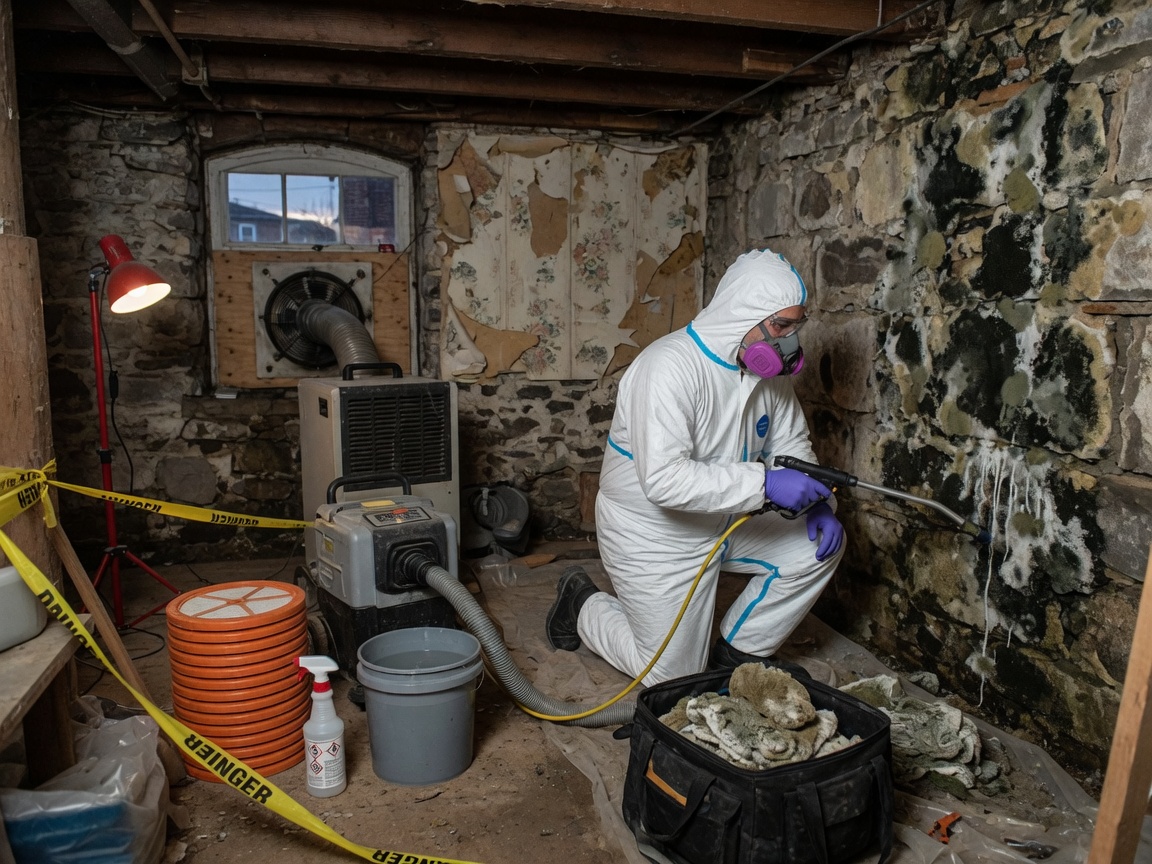
The growth is on drywall, plaster that is soft, insulation, or inside an air handler. The area is larger than a poster, or it keeps coming back. You smell mold and cannot find it. The water was sewage. You are looking at a stone basement with fiberglass glued to it. You are a landlord sending a tenant to scrub it. Any one of those is a professional job.
Opening a wall 'just to look' without containment is how a closet problem becomes a hallway problem. Photograph, close the door, and let a crew open it under negative air.
What you are paying a crew for
You are paying for containment, proper disposal, drying equipment, and the judgment not to tear out the wrong thing. In an older Gettysburg house that judgment is the expensive part. A cheap price that skips containment is not a bargain if the guest room is dusty afterward.
Get the scope in writing. If you already did a bleach pass, tell us. It changes what the surface looks like and it does not change the meter.
Keep these
- Small, dry, hard-surface spots can be cleaned at home.
- Drywall, insulation, HVAC, and anything that returns is a crew job.
- N95, gloves, detergent, and no furnace fan if you do it yourself.
- Opening a wall without containment spreads the job.