Remediation · March 2, 2026
The Complete Guide to Mold Remediation in Gettysburg
Remediation is a building repair, not a spray. In Gettysburg that means dealing with stone foundations, plaster, humid summers, and cold winters — in that order. This guide is the version we wish every homeowner had read before the first phone call.
Start with the water, not the stain
Mold is a symptom. The project fails when someone cleans the stain and leaves a wet joist, a short downspout, or a bath fan dumping into the attic. Before you compare prices, write down what happened: a leak, a flood, a smell with no story, or a stain that returns every spring. Those are four different jobs.
In Adams County the usual sources are seasonal. Spring thaw and heavy rain hit stone cellars around the borough and Barlow Knoll. August humidity loads crawls and basement air. January condensation wets cold plaster and window stools. A company that quotes you without asking which of those you have is guessing.
What a real remediation sequence looks like
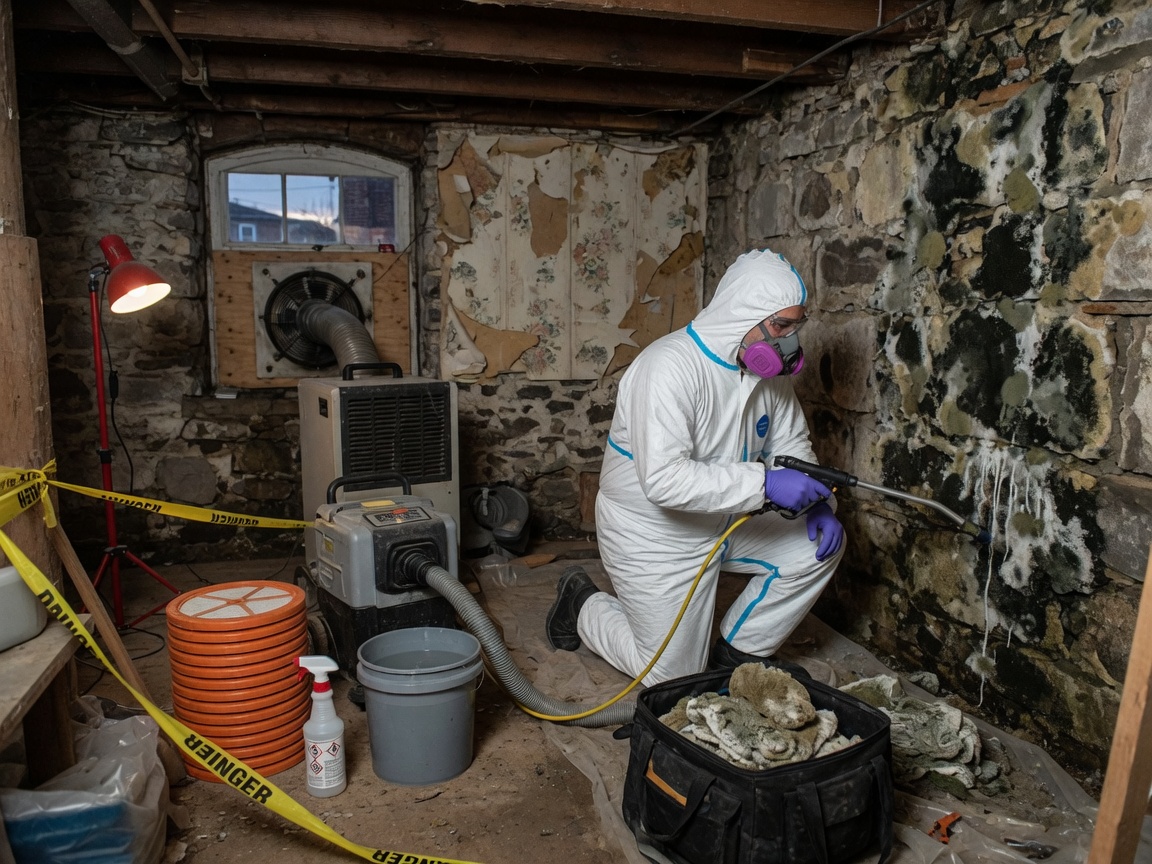
Inspection and a moisture map come first. Then containment: plastic and negative air so the work zone is dirtier than the rest of the house, not the other way around. Porous material that stayed wet — drywall paper, insulation, carpet pad — comes out. Hard surfaces are cleaned and HEPA-vacuumed. Wood that is structurally sound is dried and cleaned, not automatically replaced.
Drying continues until a meter, not a hunch, says the materials are in range. Then you get notes: what was wet, what was removed, what still needs a plumber, roofer, or a change in grading. Clearance testing is optional and useful when a buyer or insurer wants a lab comparison. It is not a magic certificate that the house can never grow mold again.
How Gettysburg houses change the work
Pre-1900 plaster is worth protecting. We remove what is crumbled and colonized and leave what can dry. Narrow borough streets change how debris leaves the house. Duplexes and College rentals share walls and sometimes attics, so containment has to respect the neighbor who did not call.
Historic fabric is not an excuse for a light wipe, and it is not an excuse for a full gut. The middle path is slower and it is the one that holds up when you sell.
What to ask before you hire
Ask what will be contained, what will be thrown away, who pays for the dumpster, and whether the quote includes drying days or stops at demolition. Ask if the inspection is included when you proceed. Ours is, when we do the remediation. Standalone testing is a separate fee, usually a few hundred dollars.
Ask what happens if they open the wall and the wet area is larger. A fair contractor stops and prices the change before continuing. Get the original number in writing before anyone sets a machine in the hallway.
Keep these
- Water source first, then containment, then removal.
- Meters decide when drying is done.
- Plaster and stone are not automatic tear-outs.
- A written quote before work is the minimum, not a bonus.