Basements · February 19, 2026
Why Bleach Does Not Fix Basement Mold
Bleach is the folk remedy we undo most often. It looks decisive because the stain fades. On a basement wall the fade is cosmetic, the water in the bleach soaks in, and the food — drywall paper, dust, raw wood — is still there when the humidity bounces back.
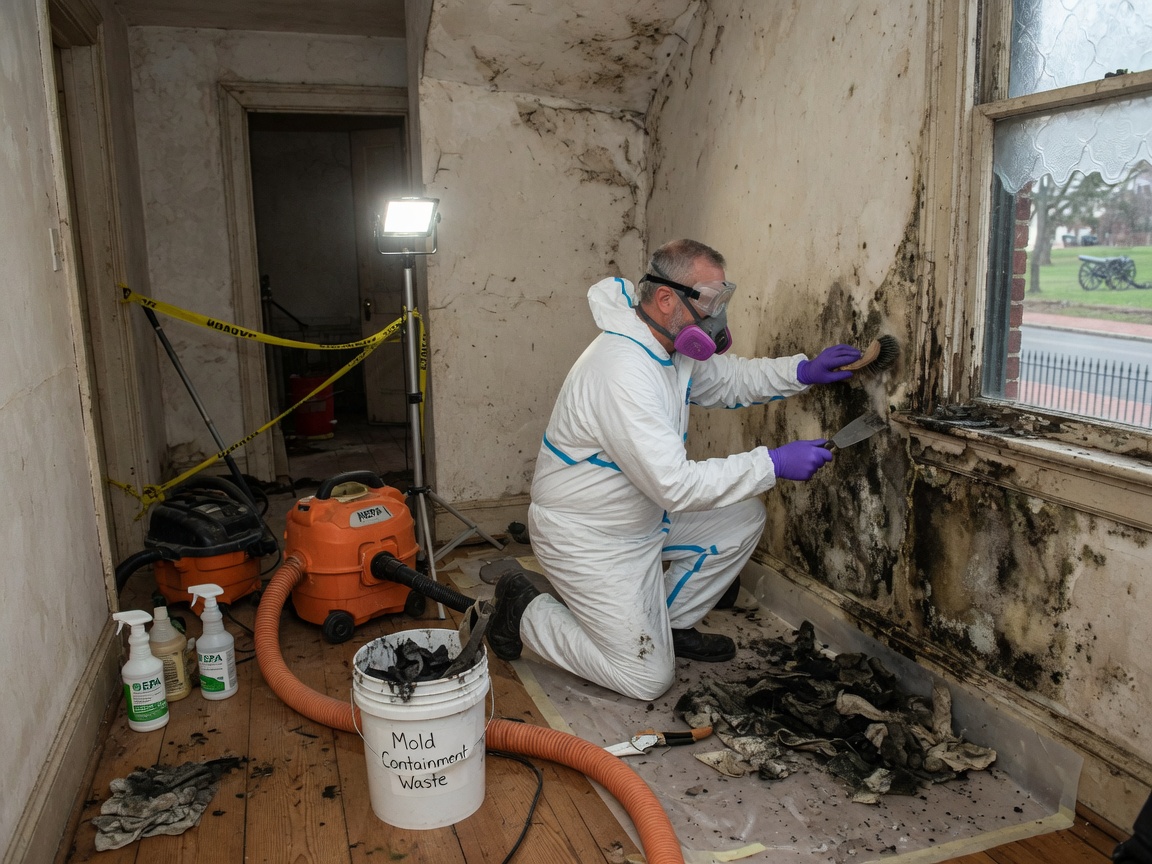
Hard surfaces versus paper
On tile or a metal utility sink, detergent and drying are enough for a small film. On drywall, plaster that has gone soft, or insulation, the colony is in the material. You cannot rinse a joist bay with a gallon of pool chemistry and call it remediated.
Stone is a special case. It is porous and it is supposed to be able to dry. Bleach can leave a blotch and a chloride residue without stopping seepage. Fix the water, clean, and let it dry.
The safety part people skip
Bleach and ammonia, including some 'all-purpose' cleaners, make a dangerous gas. Bleach in a closed cellar with no ventilation is a bad afternoon. An N95 does not make that a professional protocol.
If you already bleached a wall, tell us. We will not be impressed, and we also will not be surprised. The meter still works on a pale wall.
- Bleach fades stains and wets porous materials.
- Stone basements need drying, not a bleach dye job.
- Never mix bleach with other cleaners.