Basements · September 2, 2026
Basement Moisture After Fall Flooding Near Rock Creek
Fall storms that raise water near Rock Creek do not stay in the creek. Low basements and window wells in that drainage pick up seepage even when the house is not 'in the floodplain' on a map you glanced at when you bought it. Mold is the second problem. The first is the water still in the insulation.
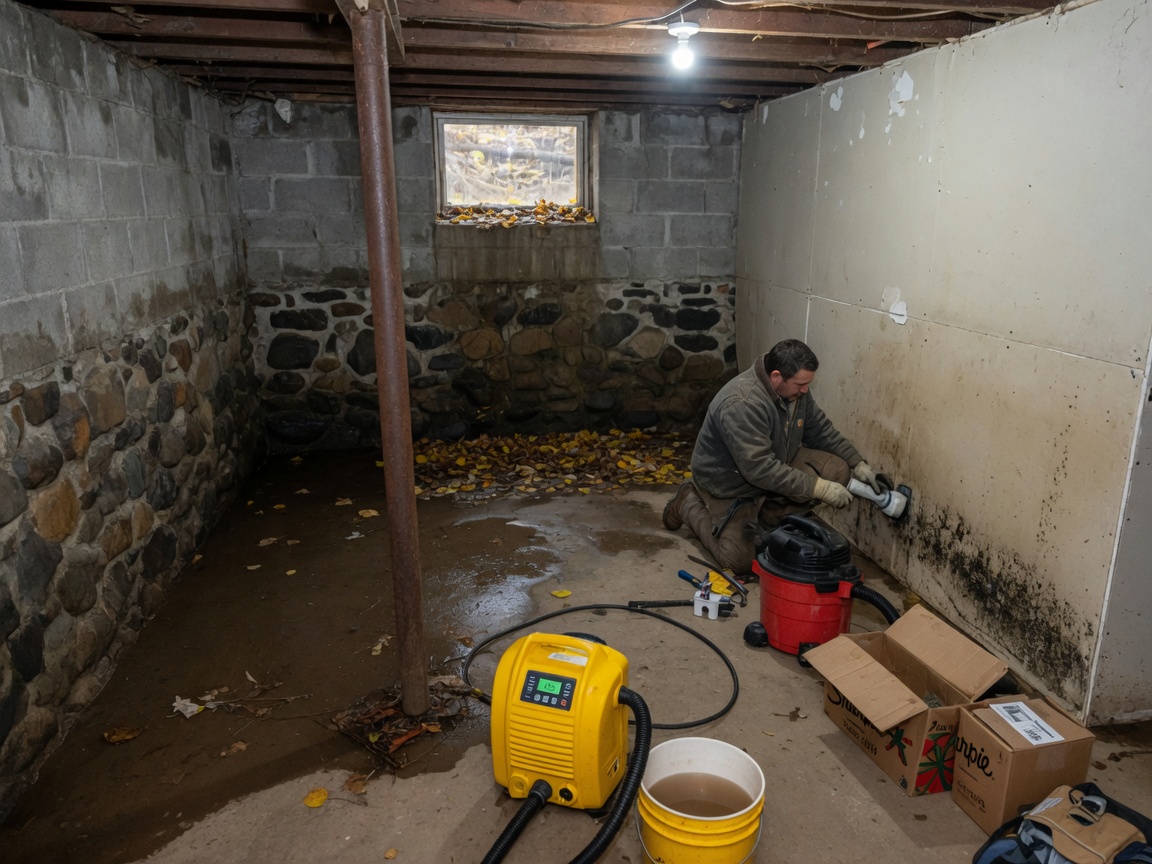
The week of the storm
If water came in and went back down, you can still have saturated pad, sill plates, and the bottom of finished walls. Pump and extract first. Do not lay rugs back down to 'see if they dry.' They will, at the speed mold likes.
Photograph the high-water mark. If you have a sump, note whether it kept up or whether the power dipped. That detail changes whether you need a battery backup more than you need a remodeling crew.
What usually has to go
Carpet pad that was underwater is done. Fiberglass that wicked up a stone or block wall is usually done. Framing may be fine once it is cleaned and metered. We do not condemn a basement from a photo of a puddle.
Sewage or a floor drain that backed up is not the same as clear seepage. Tell us if you saw or smelled sewage. Porous materials that touched it come out.
After it looks dry
Run a dehumidifier until the gauge stays under 60 percent, nearer 50 if finishes are going back in. Wait to rebuild until readings on the studs agree. Painting a damp sill to make a listing photo is how this article becomes your buyer's problem.
When the ground is workable, walk the grade on the creek side of the house. Surface water management prevents the next fall from being a reprint.
- Extract and toss wet pad before you worry about spores.
- Sewage backup is a different, stricter cleanup.
- Do not refinish until the studs are actually dry.