2026-09-16 ·
Local Soil and Drainage Issues That Lead to Crawl Space Mold
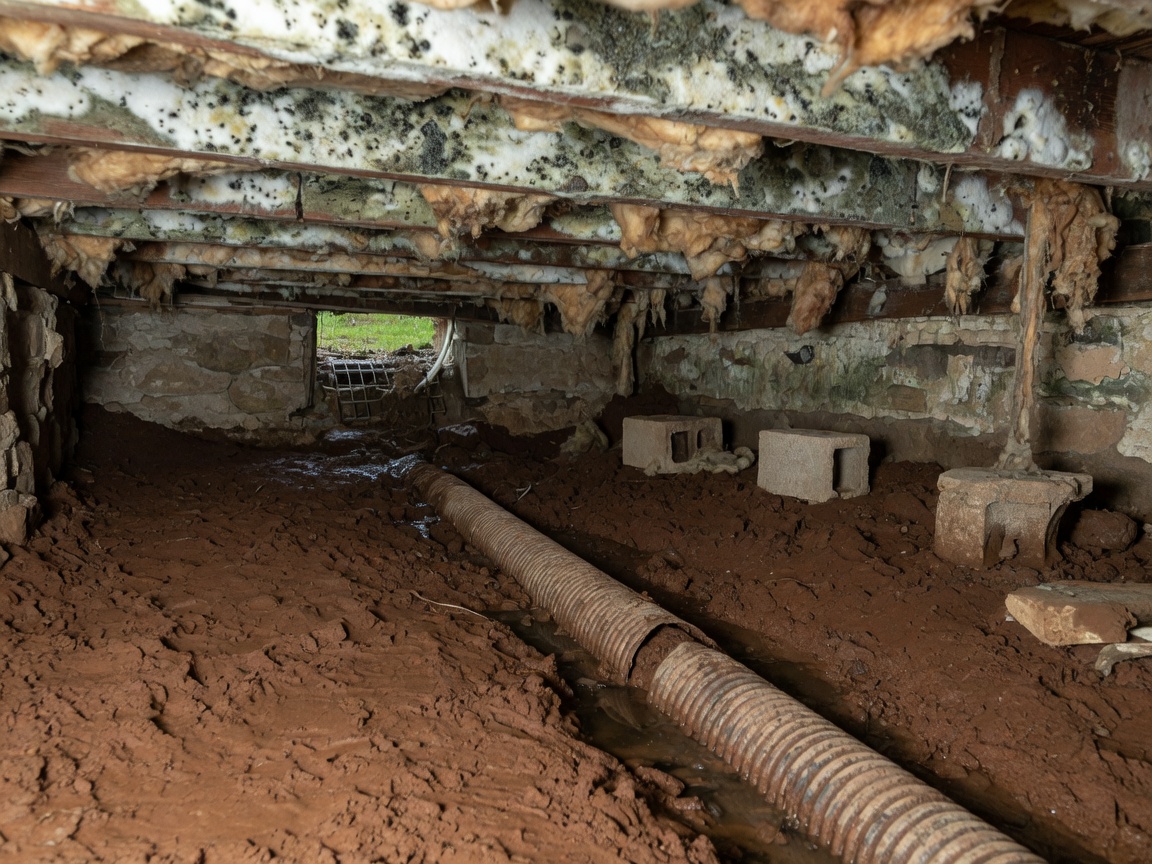
Clay soils common throughout Adams County hold water against crawl space walls and footings in Gettysburg, especially after summer storms or spring snowmelt. Homes in Historic Gettysburg and the Gettysburg College area often sit on lots where grading slopes toward the foundation rather than away from it, so runoff collects instead of flowing toward Rock Creek or nearby swales. This persistent dampness keeps relative humidity above 60 percent under the floor for weeks, allowing mold to colonize joists and insulation before homeowners notice musty odors upstairs.
Clay Soils and Water Retention Near Gettysburg Battlefield
Much of the ground around Gettysburg National Military Park and Barlow Knoll consists of silt loam over dense clay subsoil that drains slowly. When rain falls on these fields, water moves laterally until it meets a house foundation, then rises into the crawl space through gaps in block walls or around utility penetrations. In the Gettysburg College area, older homes built before modern perimeter drains experience this every time a warm summer downpour exceeds one inch per hour. The same clay layer prevents evaporation once temperatures drop in late fall, trapping the moisture through the cold winter months when ventilation is limited.
Drainage Patterns Around Historic Gettysburg Homes
Many properties in Historic Gettysburg were developed on rolling terrain that once fed small streams feeding into Rock Creek. Fill dirt added during construction often created low spots where water ponds against the rear or side walls. Carlisle Road and Hanover Street corridors show repeated patterns of sidewalk heave and yard saturation because storm sewers were sized for lighter historic rainfall. When water sits against the stem wall for more than 48 hours, it migrates under the sill plate and raises humidity in the crawl space. Nearby Hanover and Carlisle experience similar issues, but Gettysburg's battlefield preservation rules limit large-scale regrading that might otherwise improve flow.
Seasonal Climate Effects on Crawl Space Moisture
Gettysburg's humid continental climate brings warm, humid summers that load the air with moisture while cold winters create freeze-thaw cycles that crack shallow foundations. After a July thunderstorm, soil stays saturated for days because evapotranspiration is low under tree cover common in Barlow Knoll. By December, that same water expands when it freezes, widening hairline cracks that then admit more water during the January thaw. The result is year-round dampness that only drops below mold-growth thresholds for short periods in early fall.
Related Moisture Problems and Next Steps
Crawl space mold frequently appears alongside basement moisture after fall flooding near Rock Creek, so homeowners often check both areas at the same time. Dealing With Basement Moisture After Fall Flooding Near Rock Creek outlines inspection points that also apply under the floor. In winter, condensation on cold ductwork adds another moisture source; Ventilation Tips for Preventing Winter Condensation Mold in Gettysburg explains how to balance airflow without pulling humid air from the living space. When conditions require professional assessment, Basement Mold Remediation crews familiar with Adams County soil profiles can map drainage routes before any removal work begins. Gettysburg Elite Mold Remediation is available Mon–Fri 8am–6pm, Sat 9am–2pm to evaluate these site-specific issues.