Attics · March 4, 2026
Ice Dams, Slate Roofs, and Spring Attic Mold
Slate and older shingle roofs around the borough and the College are good at two things: lasting, and building ice dams when the attic is warm. In March and April we see the result as deck staining and, if the insulation got wet, a smell at the top of the stair.
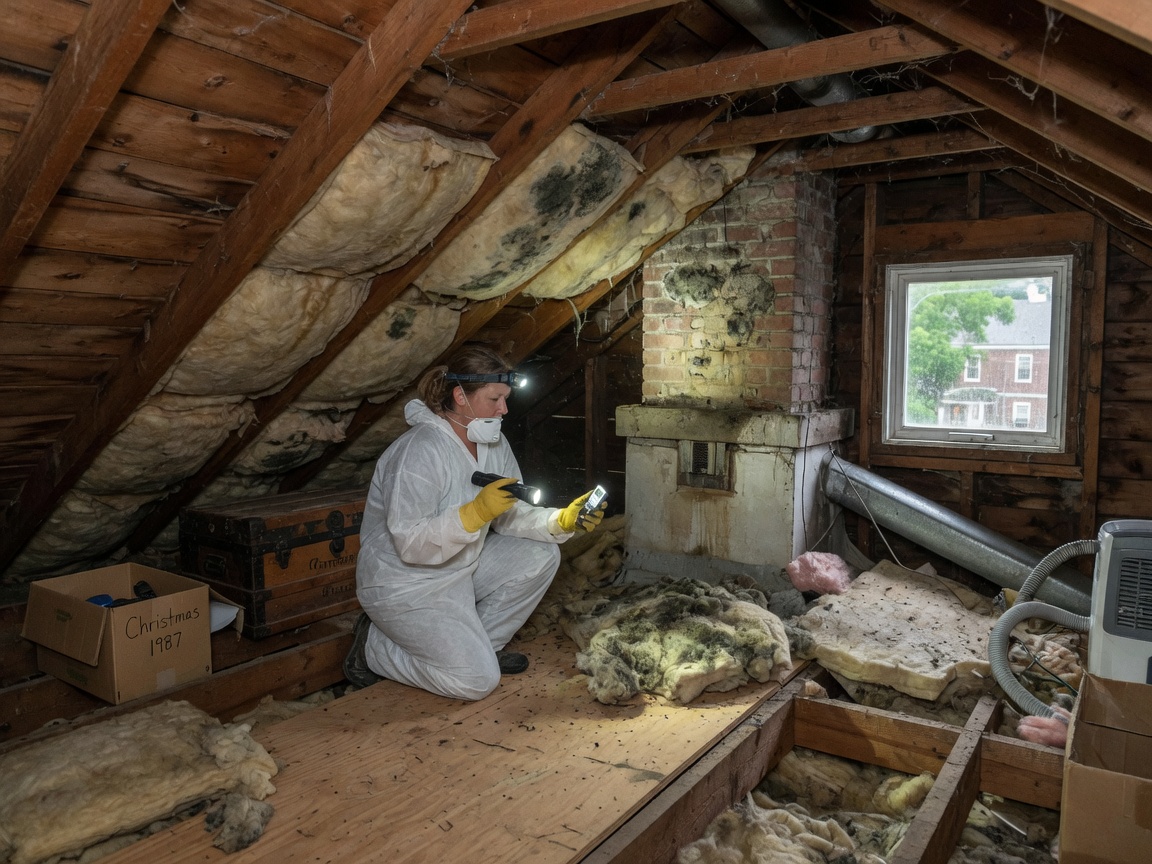
Reading the stain
Damage from a dam is often low on the roof, near the eave, and it may have stained the top of an exterior wall. Widespread black speckle in the middle of the north slope is more often condensation. A house can have both after a hard winter.
Do not assume the slate is 'done' because there is mold. Do not assume the slate is fine because a few slates look aligned. The attic tells the truth the street cannot.
Sequence the repairs
If water is still entering, the roofer goes first or we work the day after the active leak is stopped. Cleaning a deck that is still being watered is theater. Once it is dry enough to work, we remove wet insulation in those bays and clean the wood that can stay.
Prevention is attic heat management and a clear path at the eaves, which is a roofing and insulation conversation. We will point at what we see. We will not sell you a spray in place of ice-and-water strategy.
- Eave stains suggest dams; widespread speckle suggests condensation.
- Stop the leak before paying for attic cleaning.
- A spray is not an ice-dam strategy.